“Don’t just build aircraft—build systems your customers can’t outgrow or replace.”
01 INDUSTRY CONTEXT
Defense Aerospace Value Chain & Structural Landscape
1.1 Industry Structure
The global defense aerospace industry is a government-monopsonistic, technology-intensive, and geopolitically regulated sector. It is not a conventional market — it is a policy-driven allocation mechanism where winning is determined by relationships, compliance architecture, and long-cycle program execution, not price competition alone.
The Defense Aerospace Value Chain
| Tier | Function | LM Position | HAL Position |
| Tier 1 — Systems Integration | Prime contractor integrating platforms | Dominant (F-35, Black Hawk, Orion) | Emerging (Tejas, AMCA) |
| Tier 2 — Subsystem Design | Mission systems, avionics, propulsion | Significant in-house + JVs | Partially dependent (GE, Safran) |
| Tier 3 — Component Manufacture | Structures, composites, electronics | Outsourced to 1,000+ suppliers | Limited domestic ecosystem |
| Tier 4 — MRO / Sustainment | Lifecycle services, upgrades, spares | High-margin, lifecycle lock-in | Growing (ROH ~17% CAGR) |
| Tier 5 — Technology Platforms | R&D, IP, software | Proprietary IP + classified systems | Largely licensed or DRDO-sourced |
Key Success Factors
- Long-cycle program execution capability (10–30 year programs)
- Government relationship depth and security clearance infrastructure
- Indigenous IP and technology sovereignty (reduces export-control vulnerability)
- Systems integration mastery (software-hardware convergence)
- Lifecycle revenue model (sustainment > manufacturing in margin terms)
- Supply chain resilience and domestic ecosystem density
Where Both Companies Operate
Lockheed Martin is a full-spectrum prime operating across every tier with proprietary IP, global FMS relationships, and lifecycle moats worth trillions. HAL is a Tier 1 integrator-in-transition — it manufactures and assembles primarily licensed and co-developed platforms, with deepening but still incomplete indigenous capability. HAL’s center of gravity remains in the lower half of the value chain (manufacturing, MRO) rather than the upper tiers (IP generation, systems design, export FMS).
02 SOURCE ADVANTAGE BREAKDOWN
Lockheed Martin’s Competitive System — Deep Architecture
2.1 Capability Stack
Technology & R&D
Lockheed Martin invested $1.8B–$4.1B annually in R&D (FY2025 total: $4.1B) across stealth, hypersonics, directed energy, autonomy, and multi-domain software. Every dollar of R&D is structured around program capture — technology readiness levels (TRL) are mapped to anticipated contract cycles.
- F-35: TR-3 software refresh, Block 4 upgrades — software now drives platform value, not the airframe F-35:
- Hypersonics: $17.2B Missiles & Fire Control segment — proprietary propulsion and thermal shielding IP
- Space: JADC2, Orion, next-gen satellites — $12.8B revenue with $18.6B backlog
- Autonomous Systems: $1.2B invested in CCA / attritable drone integration (FY2025)
Partnerships & Ecosystem
LM manages a supply chain of 1,000+ Tier-2 and Tier-3 suppliers while simultaneously vertically integrating critical bottlenecks (e.g., Solid Rocket Motors — 40% increase in in-house production to 420 units in FY2025). The architecture is: outsource commodities, insource strategic chokepoints.
- 22 international F-35 partner nations — creating a political coalition for platform perpetuation
- Multi-year framework agreements that lock pricing and volume — reducing supplier leverage
- JV structures for international offset compliance (e.g., India: co-production arrangements)
| LM KEY FINANCIAL METRICS (FY2025) | |
| Revenue | $76.7B |
| Backlog | $165B (early 2026: $194B) |
| F-35 Revenue | $20.7B (27% of total) |
| Sustainment Revenue | $20.1B |
| R&D + Engineering Spend | $4.1B |
| CapEx | $3.1B |
| International Revenue | $10.2B |
| FMS Revenue | $18.7B |
| Operating Cash Flow | $6.9B |
| Gross Margin | ~23.5% |

2.2 Strategic Moats
1. Lifecycle Lock-In — The Sustainment Trap
The most underestimated LM moat is not the F-35 jet — it is the $1+ trillion sustainment ecosystem built around it. Once a country adopts the F-35, switching costs are astronomically high: logistics chains, pilot training, maintenance ecosystems, classified software, and interoperability networks are all Lockheed-proprietary. The customer is locked in before they sign the delivery contract.
2. Classified Program Architecture
A significant portion of LM’s revenue comes from classified programs (“black programs”) under the Advanced Development Programs (Skunk Works) division. These programs are immune to competitive bidding — only Lockheed Martin has the requisite security infrastructure, past performance, and technical understanding. This is a structural monopoly, not a competitive advantage.
3. Government Relationship Depth
Lockheed Martin holds ~26% of all U.S. prime defense contract dollars. The company’s executives rotate between industry and Pentagon positions (the “revolving door”), creating institutional alignment. Budget decisions at the DoD are structurally favorable to incumbents — Lockheed has invested decades in building this alignment.
4. IP Ownership at Platform Level
Lockheed owns the technical data rights on its platforms. When it licenses technology to international partners, it controls what is transferred. HAL, by contrast, often operates as a licensee — it manufactures the platform but does not own the IP, limiting its ability to export, upgrade, or iterate independently.
2.3 Execution Engine
Program Management Systems
LM uses integrated program control systems (IPCS) linking engineering, cost, and schedule in real-time. Earned Value Management (EVM) is mandatory across all programs. Program health reviews run at weekly (program level), monthly (segment), and quarterly (CEO level) cadences — creating a culture of early warning and course correction.
The Skunk Works Innovation Model
The Skunk Works model institutionalized a 3-speed innovation system: (1) classified breakthrough R&D at Skunk Works, (2) engineering development at the division level, and (3) production ramp at manufacturing facilities. This separates innovation velocity from manufacturing bureaucracy.
Revenue Model
LM operates a layered revenue model designed to maximize lifecycle value: platform sale (low margin) → sustainment contracts (high margin) → upgrade programs (recurring high margin) → classified services (highest margin, zero competition). The F-35 is not a product sale — it is the entry point into a 50-year revenue relationship.
03 TARGET WEAKNESS DIAGNOSIS
HAL — Brutally Honest Assessment
3.1 Financial & Scale Context
| HAL KEY METRICS (FY2025–26) | |
| Revenue | ~Rs.32,846 Cr (~$3.9B) |
| Order Book | Rs.2.54 Lakh Cr (~$30B) |
| LCA Orders | 97 orders worth Rs.62,370 Cr |
| R&D as % of Sales | ~9.5% (FY24) — high % but low absolute spend |
| IPRs Held | 1,026 (FY24) vs. LM’s thousands of patents |
| 5-Year Sales CAGR | 7.63% — significantly below defense sector norms |
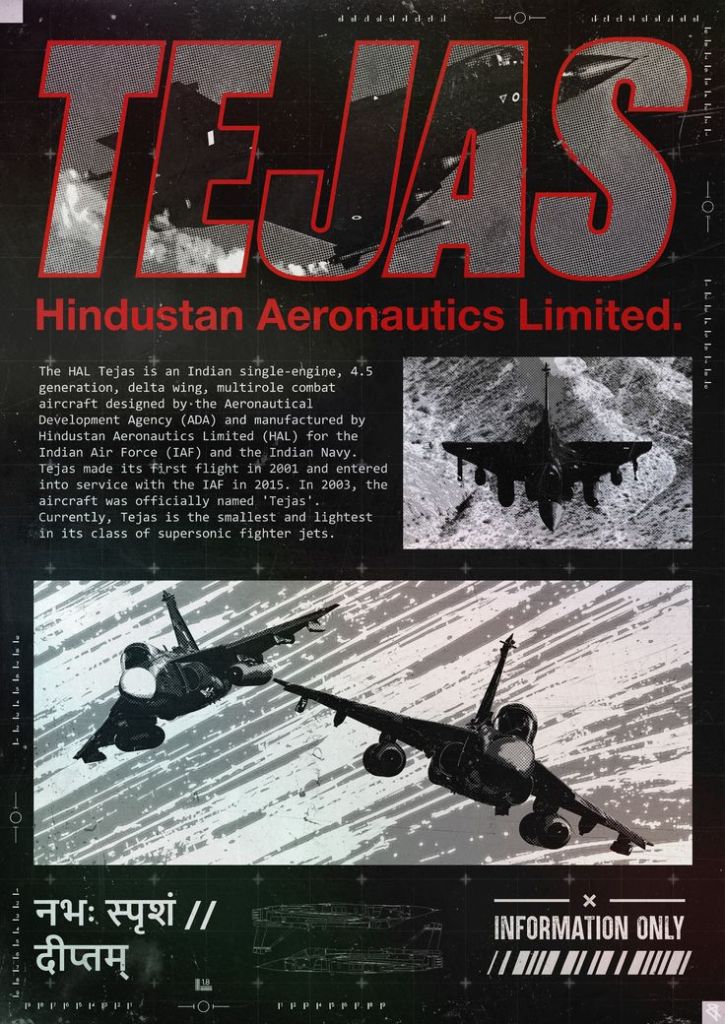
| Tejas Production Rate | 8–10/year vs. IAF requirement of 18/year |
3.2 Structural Weaknesses
Weakness 1: Production Scale Deficit — The 8-vs-18 Crisis
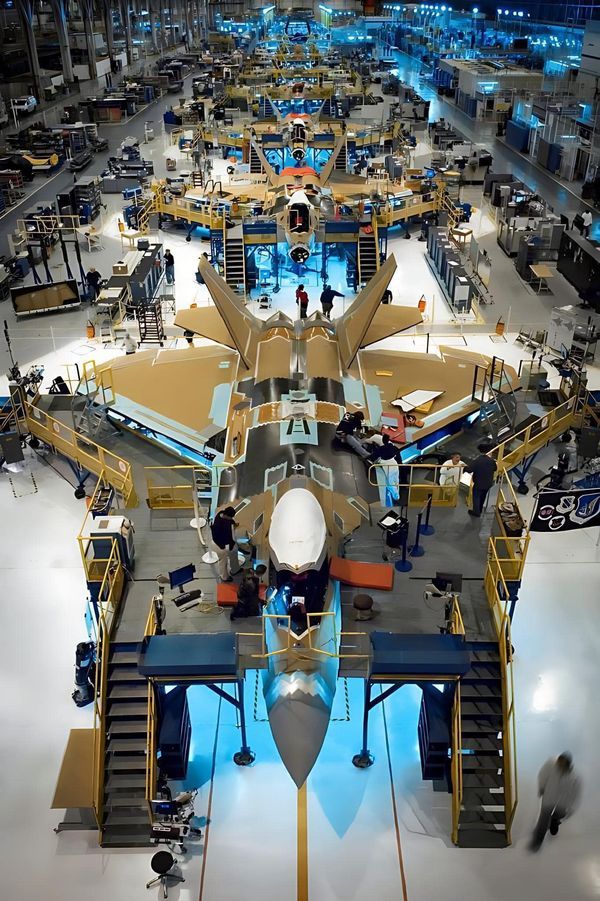
HAL produces 8–10 Tejas Mk1A jets per year against an IAF requirement of 18 per year. This is not a demand problem — there is a signed order for 83 jets. It is a manufacturing systems failure rooted in inadequate production infrastructure, supply chain immaturity, and a culture that treats target schedules as aspirational rather than contractual. By comparison, Lockheed Martin produced ~123 F-35s in 2025 with a production architecture built around rate increases and learning curves.
Weakness 2: Engine Sovereignty Gap — The Kaveri Failure
The Kaveri engine program, initiated in 1989 and still incomplete after 35 years, is not merely a technical failure — it is an innovation systems failure. DRDO and HAL could not build the institutional persistence, talent depth, or iterative testing infrastructure needed to take a jet engine from concept to certified flight. As a result, Tejas flies on GE’s F404 engine — meaning India’s “indigenous” fighter depends on a U.S. export-controlled component.
Weakness 3: Software & Mission Systems Immaturity
Modern combat aircraft are flying software platforms. HAL’s Tejas avionics lag significantly — the AESA radar (Uttam) is still in development, and Tejas currently flies with an Israeli EL/M-2032. This dependency means HAL cannot update or export the sensor package independently.
Weakness 4: Organizational Structure — PSU Constraints
HAL operates as a Defence PSU with government-mandated pay scales, civil-service HR systems, and MoD oversight on all major decisions. This creates three structural problems: (1) inability to attract top-tier engineering talent at market rates, (2) slow decision-making due to multi-layer approvals, and (3) risk aversion—managers are incentivized to not fail, not to innovate.
Weakness 5: Lifecycle Revenue Model Absent
HAL earns significant revenue from Repair & Overhaul (ROH — 17% CAGR over FY16-24). However, this is reactive sustainment, not strategic lifecycle capture. HAL does not own the IP on most legacy platforms (Su-30, Hawk) and therefore cannot capture upgrade revenue — that flows back to Russia or BAE.
Weakness 6: Export Strategy — Structural Infancy
HAL’s export revenue is nascent. A contract to supply two Hindustan-228 aircraft to Guyana is celebrated as a major win. LM books $18.7B in FMS annually. HAL lacks the political-military relationship infrastructure, ITAR-compliant data management, and certification ecosystem needed to compete in global export markets at scale.
04 STRATEGIC DELTA
What LM Does That HAL Does Not — The Mechanism Gap
The following maps the specific mechanisms — not abstract capabilities — that explain why the performance gap between LM and HAL is structural, not incidental.
4.1 The Ten-Dimension Gap Framework
| Dimension | Lockheed Martin | HAL | Gap Type |
| Platform IP Ownership | Owns full technical data rights | Licensee on Su-30, Hawk; emerging on Tejas | Structural / Capability |
| Engine Design | In-house propulsion R&D (P&W JV + internal) | No certified jet engine after 35 years | Capability |
| Software / Mission Systems | Software-defined platforms; proprietary Mission Data | Dependent on foreign avionics | Capability + Process |
| Production Rate Architecture | Rate-based mfg with learning curve management | Milestone-based; 8–10 jets/yr vs 18 needed | Process |
| Lifecycle Revenue Model | FMS + sustainment + upgrades = 40%+ of revenue | ROH is reactive; upgrade revenue lost to OEMs | Strategic Intent |
| Program Control Systems | EVM, IPCS, weekly health reviews | Bureaucratic milestone tracking | Process |
| Export Infrastructure | $18.7B FMS; 22 partner nations | ~$150M exports; Guyana-scale deals | Strategic Intent |
| Talent Architecture | Market-rate compensation + Skunk Works autonomy | PSU pay scales; cannot compete for AI/SW talent | Structural |
| Classified Program Track | Skunk Works — advanced tech, immune to competition | No equivalent program office | Strategic Intent |
| Supply Chain Control | 1,000+ managed suppliers; SRM vertical integration | SME ecosystem immature; import-dependent | Capability + Process |
4.2 The Three Core Gaps
Gap 1: Capability Gap — The Engine-Software-Sensors Triad
HAL cannot design a certified jet engine, cannot independently develop AESA radar, and cannot build the full mission system software stack for a modern combat aircraft. These three capabilities — propulsion, sensing, and software — define a Tier-1 aerospace prime. Without them, HAL remains a sophisticated manufacturer rather than a true systems integrator.
Gap 2: Process Gap — Rate vs. Milestone Manufacturing
LM’s production management is rate-obsessed: every program has a production rate roadmap targeting specific units/month with defined manning, tooling, and supplier delivery cadences. HAL operates on milestone planning — “deliver X aircraft by date Y” — without the rate-management infrastructure. When supply chain disruptions occur, HAL cannot dynamically rebalance production.
Gap 3: Strategic Intent Gap — Product Company vs. Lifecycle Company
HAL sees itself as an aircraft manufacturer. Lockheed Martin sees itself as a defense capability provider whose aircraft are just the entry point into a 50-year relationship. This intent difference drives every downstream decision: investment in IP vs. investment in production capacity; sustainment margin capture vs. handing back upgrade revenue to foreign OEMs; export as strategy vs. export as afterthought.
05 REPLICATION STRATEGY
What Can Be Copied, Adapted, or Cannot Be Replicated
5.1 What Can Be Directly Replicated
- Earned Value Management (EVM) — A program control discipline, not a capital investment. Requires process re-engineering and training.
- Production Rate Architecture — Shifting from milestone to rate-based manufacturing planning. Requires investment in MES (Manufacturing Execution Systems).
- Lifecycle Revenue Capture Strategy — Designing sustainment, upgrade, and spares contracts at the platform sales stage. A business model choice.
- Supplier Ecosystem Development — Formalizing tiered supplier development programs. Feasible within India’s Atmanirbhar framework.
- Skunk Works Model (adapted) — A small, autonomous, high-talent advanced development unit funded outside normal budget cycles. HAL can establish this as a Special Purpose Vehicle (SPV).
- Dual-Sourcing Critical Subsystems — Reducing single-supplier risk through structured indigenization. Already aligned with MoD policy.
5.2 What Must Be Adapted — Local Constraints
Talent Architecture — The PSU Constraint
LM’s market-rate compensation model cannot be directly replicated in HAL’s PSU structure. Adaptation: Create a ring-fenced Advanced Technology Division (ATD) as a subsidiary company — not a DPSU — with private-sector compensation norms, ESOP structures, and performance-based culture. This is the adaptation India used successfully with ISRO’s commercial arm, NewSpace India Limited.
Government Relationship Architecture
LM’s “revolving door” between industry and Pentagon cannot be replicated in India. Adaptation: HAL must build formal relationship mechanisms — Joint Working Groups with IAF and MoD, embedded program liaison officers, and structured industry-government technical councils. India’s iDEX (Innovations for Defence Excellence) framework offers one channel.
Export FMS Equivalent
India cannot replicate the U.S. Foreign Military Sales system. Adaptation: India’s Defence Acquisition and Export Council (DAEC) combined with Lines of Credit from EXIM Bank can serve as a partial equivalent. HAL must learn to co-design export deals with MEA and MoD, not just build aircraft.
Classified Program Track
HAL cannot independently build the security infrastructure for a Skunk Works-type classified development unit. Adaptation: Work within the DRDO classified program framework but establish embedded HAL engineering teams in DRDO programs — ensuring HAL captures the IP and manufacturing knowledge, not just assembly contracts.
5.3 What Is NOT Replicable — And Why
- F-35 program scale and 22-nation coalition: HAL cannot replicate a 60-year, $1.7T lifecycle program. It must find its own equivalent in AMCA + regional export coalition.
- Classified Skunk Works IP: Decades of proprietary stealth, sensor fusion, and EW IP. HAL must build its own indigenous IP base.
- ITAR-compliant global supply chain: LM’s chain operates within U.S. export control architecture. HAL must build a non-ITAR supply chain — actually a strategic advantage if executed correctly.
- 26% share of DoD contract dollars: Systemic incumbency requires 50+ years of consistent delivery. HAL must focus on becoming India’s dominant prime.
- Shareholder-return-driven capital allocation: HAL’s PSU structure limits this as a capital efficiency signal. This is a structural constraint, not a strategic choice.
06 IMPLEMENTATION ROADMAP
Phased Blueprint for Strategic Transformation
The following roadmap translates the strategic gaps into a sequenced, resource-calibrated action plan. Each phase builds on the last — Phase 1 creates operational credibility needed to win resources for Phase 2, and Phase 2 creates the indigenous IP and rate-manufacturing capability needed for Phase 3’s export ambitions.
| PHASE 1 | QUICK WINS | 0–12 MONTHS |
| KEY ACTIONS |
| 1. Implement Earned Value Management (EVM) across all major programs — mandate monthly cost-schedule-technical reviews |
| 2. Establish a dedicated Production Rate Management Office (PRMO) for Tejas Mk1A — target 12 jets/year by Month 9 |
| 3. Launch a ‘Critical Supplier Development Program’ — identify 20 strategic sub-tier vendors and embed HAL engineers |
| 4. Design all new platform contracts (LCA Mk2, LUH) with explicit sustainment and upgrade revenue clauses from Day 1 |
| 5. Create a ring-fenced ‘HAL Advanced Technology Cell’ (ATC) — 100-person team, private-sector HR norms |
| 6. Negotiate IP ownership terms in all new technology transfer or joint development agreements |
| RESOURCES REQUIRED EVM software + consultants: ~Rs.50 Cr | PRMO staffing: 30 specialists | Supplier development fund: Rs.200 Cr | ATC setup: Rs.150 Cr (Year 1) |
| EXPECTED OUTCOMES Tejas delivery rate: 8–10 → 12 units/yearBaseline EVM data established for all programsFirst IP-owned sustainment contract structuresATC operational with first 50 engineers hired at market rates |
| PHASE 2 | CAPABILITY BUILDING | 1–3 YEARS |
| KEY ACTIONS |
| 1. AMCA Program: Establish HAL as true prime (not just manufacturer) — own the Systems Engineering function, not just assembly |
| 2. Engine Program: Partner with Safran or GE in a structured co-development (not license) agreement — IP sharing mandatory. Target: core engine demonstrator by Year 3 |
| 3. AESA Radar: Drive Uttam program to operational readiness — establish a HAL-BEL-DRDO integrated software/sensor team |
| 4. Manufacturing Transformation: Deploy MES at Nashik and Bengaluru complexes — real-time production visibility and rate management |
| 5. Export Market Entry: Target 3 markets (Vietnam, Egypt, Nigeria) with Tejas + Dhruv packages — establish G2G defense framework agreements |
| 6. HAL ATC: Scale to 300 engineers — focus on AI-enabled MRO, autonomous systems, and digital twin manufacturing |
| 7. Talent: Launch HAL Technology Fellows Program — 5-year contracts at Rs.50–80L/year for PhD-level engineers |
| RESOURCES REQUIRED AMCA systems engineering: Rs.2,000 Cr/year | Engine co-development: Rs.1,500 Cr | MES deployment: Rs.400 Cr | Export market development: Rs.300 Cr/year | ATC scaling: Rs.500 Cr/year |
| EXPECTED OUTCOMES Tejas delivery rate: 18+/year by Year 3First export order (Vietnam or Egypt) of 12–18 TejasAESA radar (Uttam) on Tejas Mk1A operationalEngine demonstrator running by Year 3HAL owns Systems Engineering on AMCA — not just manufacturing |
| PHASE 3 | STRATEGIC TRANSFORMATION | 3–7 YEARS |
| KEY ACTIONS |
| 1. AMCA Program: HAL as full Tier-1 prime with 60%+ indigenous content, certified engine, and indigenous AESA — truly export-competitive |
| 2. Regional FMS Equivalent: With MoD, establish an ‘India Defence Export Framework’ — LoC-backed, G2G, covering Tejas, LUH, Dhruv, and future AMCA |
| 3. Lifecycle Revenue Architecture: Build a fully integrated HAL ‘Digital Aerospace Services’ division — MRO analytics, predictive maintenance, mission data updates |
| 4. Classified Program Track: Establish a DRDO-HAL black program office for next-gen stealth UAVs and directed energy systems |
| 5. Supply Chain Sovereignty: Build India’s first Tier-2 aerospace manufacturing corridor (Nashik-Bengaluru-Hyderabad) with 500+ MSME suppliers certified to AS9100 |
| 6. Talent: HAL ATC becomes an autonomous subsidiary — ‘HAL Aerospace Technologies Pvt. Ltd.’ with ESOP, external board, and potential IPO visibility |
| 7. Target: $10B+ revenue, $5B+ order book in exports, and AMCA as India’s F-35 equivalent anchor platform |
| RESOURCES REQUIRED AMCA full development: Rs.15,000 Cr (government-funded) | Export framework: MoD + MEA mandate + EXIM LoC of $3B | Aerospace corridor: Rs.5,000 Cr | Digital services division: Rs.800 Cr |
| EXPECTED OUTCOMES HAL revenue: Rs.80,000–100,000 Cr (~$10B)Exports: $2–3B/year by Year 7AMCA: First flight by Year 5, production sanction by Year 7HAL is India’s de facto defense prime — strategic technology company, not just manufacturerIndigenous engine certified for LCA Mk2 / AMCAAESA radar on all combat platforms |
07 FINAL INSIGHT
The Strategic Misunderstanding — Root Cause Analysis
| “What HAL misunderstands about competing with Lockheed Martin is not that it lacks technology, but that it lacks the institutional architecture to convert technology into strategic lock-in.” |
Why This Insight Is Non-Obvious
The conventional narrative focuses on the technology gap — HAL cannot build stealth aircraft, lacks a certified engine, and has dated avionics. All true. But it is the wrong framing. Technology gaps are closeable. India has demonstrated this in space (Chandrayaan, Aditya-L1), in missiles (BrahMos, Agni), and in nuclear propulsion. The technology gap is real but solvable with time, investment, and focus.
The deeper, non-obvious problem is architectural. Lockheed Martin’s competitive advantage is not the F-35 jet. It is the institutional system that converts an aircraft sale into a 50-year revenue relationship that no competitor can disrupt. It is the classified program architecture that puts entire technology domains beyond competitive reach. It is the government relationship depth that makes Lockheed’s budget share feel structural. These are not technology advantages — they are institutional design advantages.
What HAL Actually Needs to Build
HAL needs to shift from building aircraft to building strategic dependencies. When HAL delivers a Tejas to the IAF, the question is not ‘did we deliver on time?’ — it is ‘how do we ensure that the IAF depends on HAL for the next 40 years of upgrades, mission software, and capability evolution?’ Lockheed Martin does not sell the F-35. It sells dependency, and the jet is the instrument of that dependency.
The AMCA Opportunity — If Seized Correctly
The AMCA program is HAL’s singular opportunity to build its version of this lock-in architecture. If HAL approaches AMCA as a manufacturing program — build to spec, deliver, move on — it will produce India’s most advanced fighter jet and gain nothing strategically. If HAL approaches AMCA as a platform for a 60-year ecosystem — owning the engine, the radar, the mission software, the logistics chain, and the upgrade cycle — it will create the institutional moat that transforms HAL from a PSU manufacturer into a genuine defense prime.
The difference between those two futures is not funding or technology. It is strategic intent, institutional design, and leadership willingness to defer short-term production metrics for long-term capability sovereignty.
The Uncomfortable Truth
HAL’s deepest problem is not that it faces Lockheed Martin. It is that HAL was designed by India’s post-independence policy architecture to be a safe, government-controlled manufacturer — not a global technology competitor. Its incentive structures, governance model, and organizational culture are optimized for compliance with government requirements, not for the aggressive innovation and lifecycle capture that defines the global defense prime model.
The countries that have successfully bridged this gap — France (Dassault), Israel (Elbit), South Korea (KAI) — did not do so by giving their defense manufacturers more money. They did so by giving them genuine autonomy, commercial discipline, and export mandates. India has not yet made that institutional decision for HAL. Until it does, HAL will continue to close technology gaps only to find that Lockheed Martin’s true advantage — institutional architecture — remains stubbornly out of reach.

 STRATΞLLI